


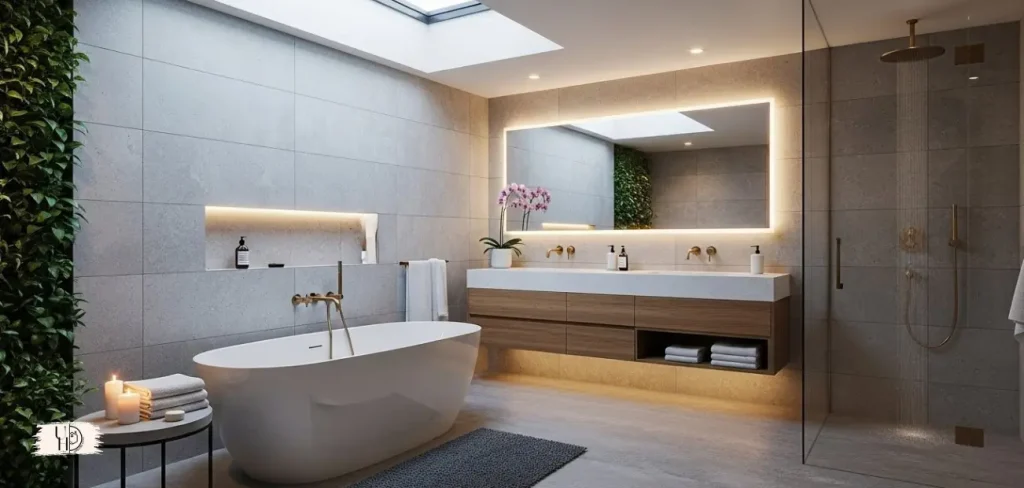
In recent years, “bathroom revitalization” has become a hot topic of concern for consumers in the home decoration market. Especially in the trend of pursuing both comfort and aesthetics, acrylic freestanding tub has rapidly emerged, moving from high-end hotels and villas to more ordinary households.
It not only represents an attitude of “enjoying life” but also reflects the redefinition of lightness, spatial sense, and visual aesthetics in modern bathroom design.
However, in actual decoration, it is not easy to design and choose a suitable freestanding bathtub. Through interviews with multiple interior designers and bathroom industry experts, the reporter brings you an in-depth report on the “Acrylic Freestanding Tub Design Guide”.
Table of Contents
1. Why has the freestanding bathtub become the protagonist of bathroom renovation
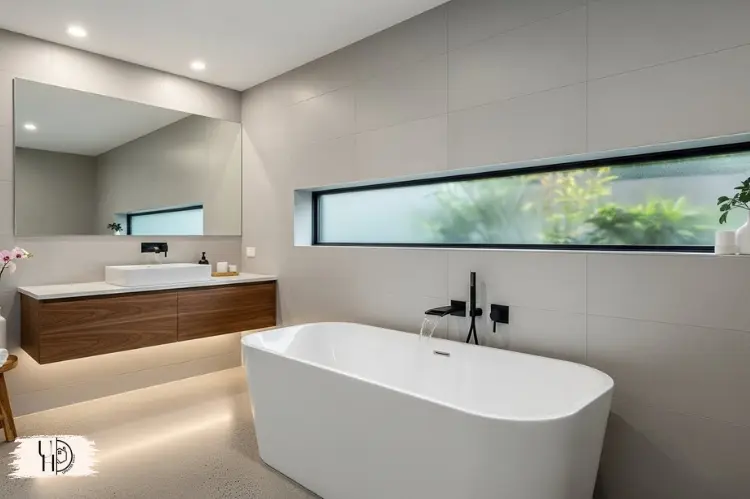
According to the 2025 Bathroom Trends Report released by the National Kitchen & Bath Association (NKBA), over 60% of new residential or renovation projects tend to use freestanding bathtubs, with acrylic material products growing the fastest.
Industry experts point out that this type of bathtub combines the characteristics of lightness, aesthetics, and durability, becoming the ideal “comfort focus” for modern residences.
Senior designer Lina Chen said, “The charm of a freestanding bathtub lies in its ability to be freely placed without being attached to walls or foundations. This’ independent posture ‘precisely represents the freedom and individuality pursued by modern design.
Compared to traditional embedded bathtubs, the Acrylic Freestanding Tub also offers better installation flexibility and visual versatility. For families undergoing bathroom renovation, it can create a “home SPA” atmosphere in a limited space.
2. Advantages of Acrylic Material: Lightweight and Comfortable Coexistence
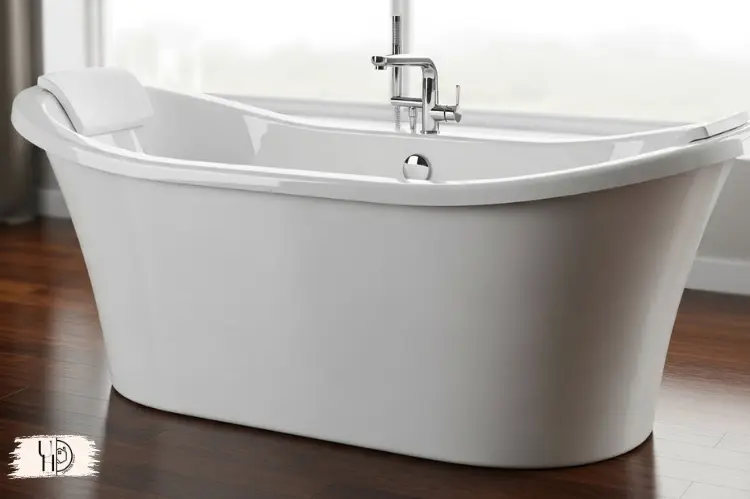
Why is the market increasingly favoring acrylic materials?
From a professional perspective, acrylic has the following significant advantages compared to cast iron, ceramics, or stone:
- Lightweight design: Acrylic bathtubs of the same size weigh only one-third of cast iron bathtubs, making them more suitable for high-rise residential or old house renovations.
- Excellent insulation performance: Acrylic has slow thermal conductivity, which can maintain the temperature of the bath water for a more extended period of time and enhance the comfort of soaking.
- Exquisite appearance: Its surface is smooth, shiny, and clean, easy to clean, and has a warm touch.
- Strong plasticity: The material is flexible and can create diverse shapes – from minimalist straight lines to soft curves.
This is a material that combines functionality and aesthetics, “industry insiders pointed out.” Consumers want bathtubs to be both aesthetically pleasing and user-friendly, and Acrylic perfectly meets these two requirements. ”
3. Space layout: the key to determining whether the bathtub is “integrated” into the design
An experienced construction designer told reporters:
A freestanding bathtub is not a decoration placed randomly; its beauty comes from the
mastery of spatial proportions
A. Central layout
If the bathroom area is large, the bathtub can be placed in the center of the room or near the window. This design has the most visual impact, with light and shadow falling on the water surface, naturally forming a focal point for rest.
B. Wall layout
Suitable for small and medium-sized bathrooms, it can save space and facilitate pipeline layout. Paired with wall-mounted faucets or hidden drainage devices, it can maintain a neat and straightforward visual effect.
C. Corner style layout
For irregular layouts, placing the bathtub in the corner can free up the central activity area and create visual balance.
Design suggestion:
- The distance between the bathtub and the wall should be maintained at 8-12 inchs.
- Reserve at least 23 inchs of passage space around the bathtub.
- Light should come from natural window edges or top lighting as much as possible.
- A well-designed layout can make the freestanding bathtub appear as if it were custom-made for this space.
4. Aesthetics of Form: From Function to Art
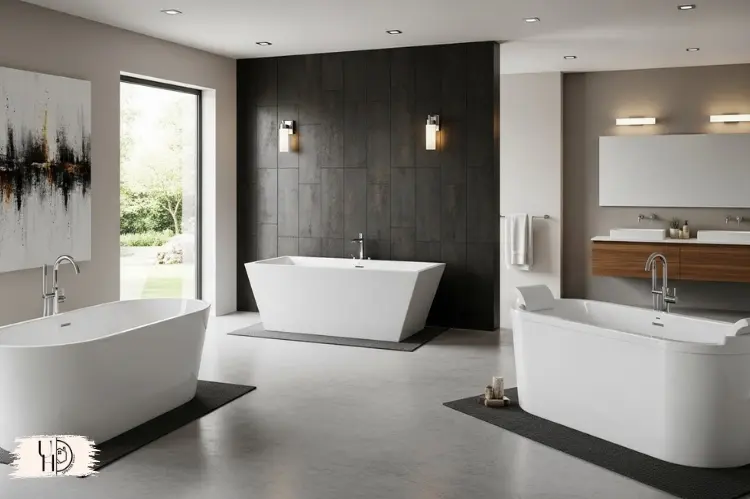
- In multiple bathroom exhibition halls visited by reporters, the design of the Acrylic Freestanding Tub is dazzling.
- From minimalist rectangles, classic ellipses, to double-backed egg shapes, each one expresses a different attitude towards life.
- Industry designers have summarized the three most popular styles:
- Minimalist: Clean lines, coordinated proportions, and emphasis on the sense of space’s white space.
- Classic Slipper: The high and low edge design combines beauty and practicality, commonly seen in European and light luxury styles.
- Sculptural: characterized by asymmetrical or curved shapes, suitable for modern art style residences.
Designer Evan Roberts pointed out, “When choosing a shape, the key is not ‘the more special the better,’ but to match the overall spatial language. For example, minimalist spaces are suitable for clean lines, while natural wind spaces are more suitable for curved and flowing shapes
5. Color and matching: making the bathtub a “color palette” for the space
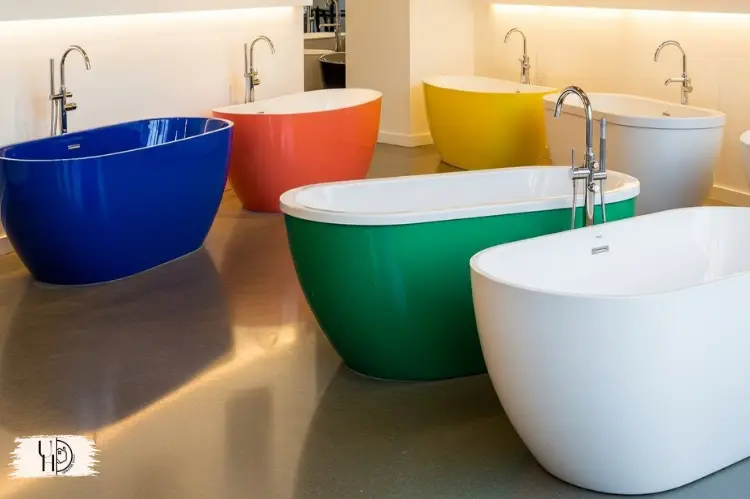
Traditional bathtubs are primarily white, but nowadays bathroom designs have already surpassed a single color tone.
The plasticity of Acrylic material gives the bathtub more expressiveness:
- White: timeless classic, versatile with any material.
- Matte black: Creating a modern, industrial, or light luxury feel;
- Cream and gray beige: soft and natural, suitable for Nordic and warm styles;
- Two-tone splicing: black on the outside and white on the inside, or gold on the outside and white on the inside, making the space more layered.
Industry insiders believe that the color of the bathtub is an extension of emotions. When paired properly, it can even become the visual core of the entire space.
6. Details determine texture: faucet and hardware selection
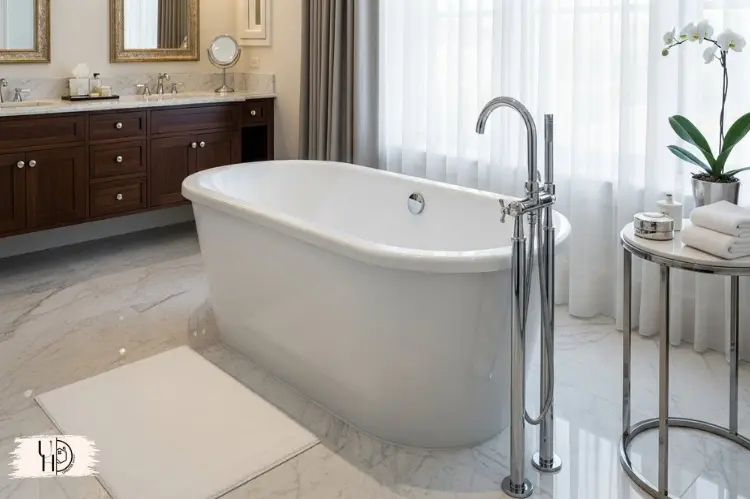
In the design of a freestanding bathtub, the faucet and hardware serve as the “extension of functionality” and the “finishing touch of design.”
- Floor-mounted faucets: the most ceremonial and often paired with oval or egg-shaped bathtubs;
- Wall mounted faucet: saves space and is suitable for bathtubs arranged against walls;
- Deck-mounted: Some bathtub edges have reserved holes for easy operation.
Currently, black, gold, and brushed nickel are the mainstream color schemes.
Design experts suggest that the lines of the faucet should be consistent with the shape of the bathtub – straight lines to straight lines, curves to curves
Additionally, the design with handheld nozzles has become mainstream, offering both convenience for cleaning and increased flexibility in use.
7. Installation and maintenance: Concealed craftsmanship is equally important
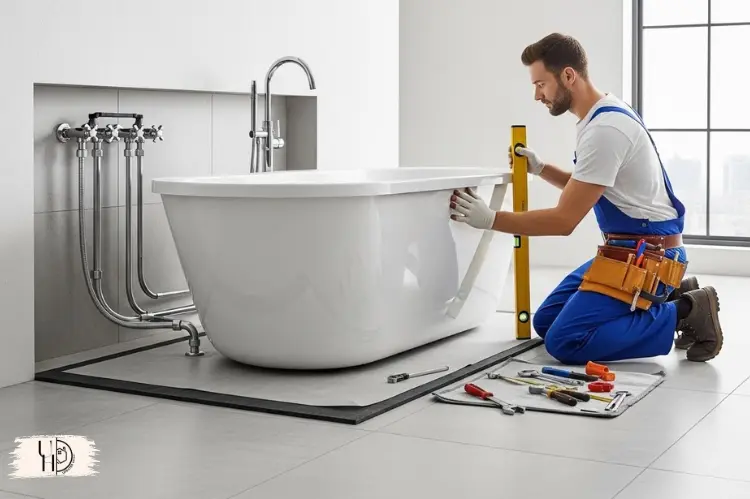
Although a freestanding bathtub is easy to install, the details cannot be ignored.
Professional installation personnel remind:
- The drainage system should reserve maintenance ports to avoid difficulties in later maintenance.
- The ground should be kept level to ensure that the bathtub is stable and not shaking.
- Plan the position of the inlet pipe in advance to prevent rework.
- Regular cleaning and maintenance, using neutral cleaning agents, helps maintain the shine.
Although acrylic material is durable, it is still necessary to avoid using abrasives or acidic - cleaning solutions to prevent the surface from losing its luster.
8. Industry Trend: From “Function Upgrade” to “Sensory Design”
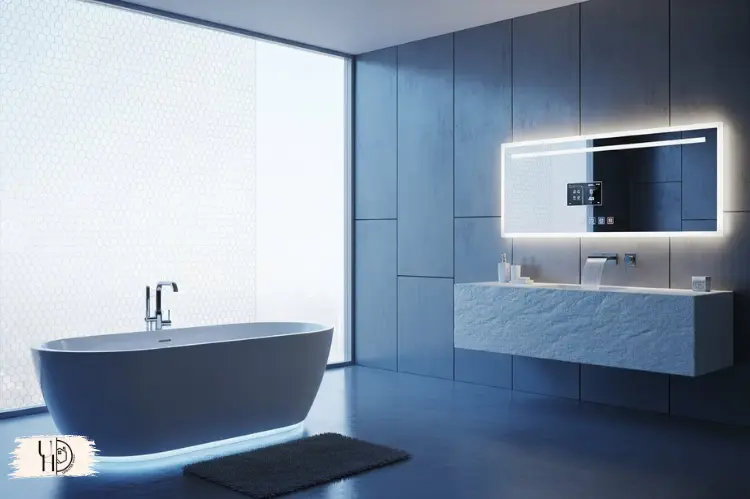
Experts in the bathroom industry generally believe that in the future, bathtub design will shift from “functional satisfaction” to “emotional expression”.
Several major trends worth paying attention to in 2025:
- Integrating lighting and atmosphere design: LED light strips and hidden light sources are widely used to enhance spatial hierarchy.
- Minimalist structured design: seamless connection and hidden drainage have become mainstream.
- Lightweight and environmentally friendly materials: Recycled acrylic and composite materials are gradually becoming popular.
- Customizable service: Consumers can customize the size and backrest angle based on their height and preferences.
- Industry insiders summarize that “modern consumers are not just buying bathtubs, but buying a lifestyle experience.
- Conclusion: Let design return to comfort and human-centeredness
In bathroom decoration, a well-designed Acrylic Freestanding Tub often determines the overall style of the space.
It represents not only the bathing function, but also a lifestyle attitude – independent, comfortable, and full of ceremony.