


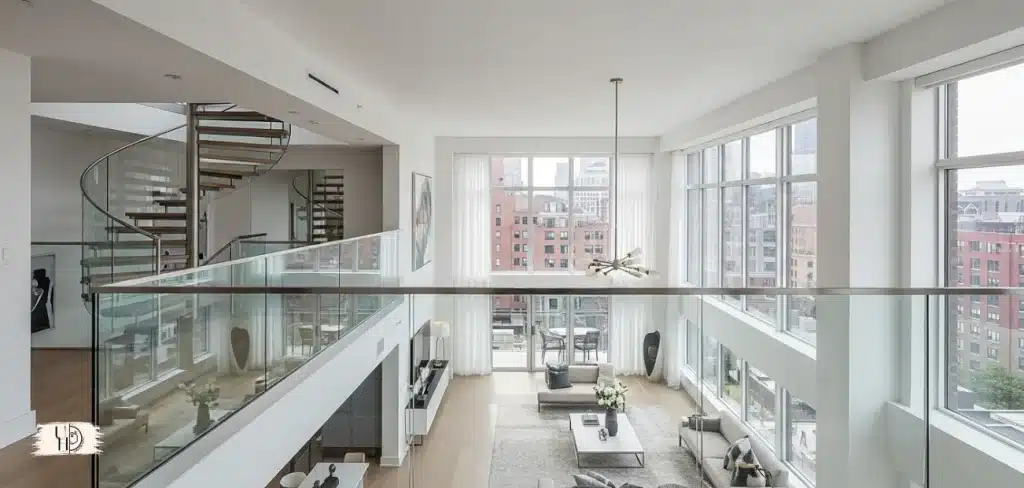
Glass railings are ideal for lofts and balconies because they maintain sightlines, allow light to penetrate and provide an open, unobstructed space. When compared to conventional wooden or metal railings, glass railings preserve visibility between the interior and exterior – or the floor below and above – making spaces appear more open and spacious. When used safely with tempered glass and secure framing, these meet coding requirements for safety, and provide a clean, contemporary look that fits in with modern design styles.
Table of Contents
Introduction
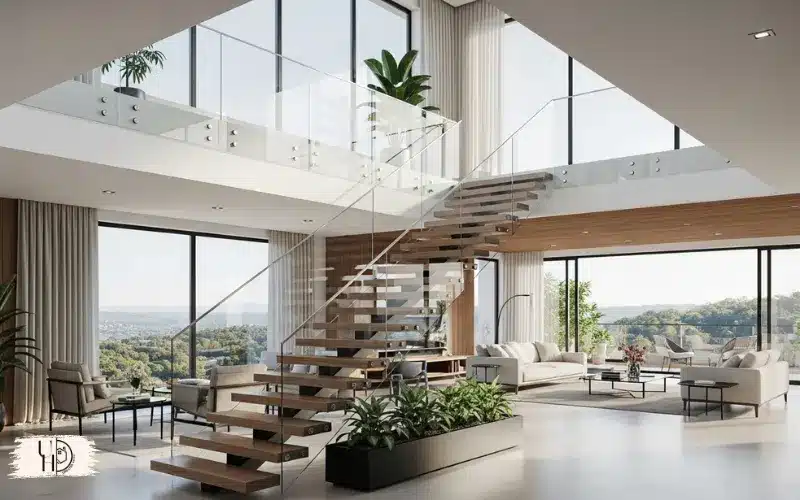
Lofts and balconies often serve as transitional zones – places where indoors meets outdoors, or where vertical space invites both function and design. In these areas, the railing isn’t just a safety feature; it’s a design statement. Too bulky, and it closes off the room. Too minimal, and it Lofts and balconies are often “transition” spaces – either workplace interconnectivity with the outdoors or amenities taking up valuable vertical spaces.
In this instance, the railing is a design element. Too bulky, and it closes off the room. Too thin, and it may be less safe or less robust. This is where design decisions such as installing glass interior railing systems can make such a difference – providing a stylish blend of design, safety, and visibility.
Open-concept living has become a priority for many homeowners and designers in Western Canada, as have glass products. Be it a retrofitted inner-city apartment or a balcony new build, glass railings can be as suitable for interior as for exterior spaces. But it’s also the fact that glass recedes, so features, furniture and landscapes are enhanced.
But the decision about which system to use is more than about looks. Characteristics such as glass thickness, frame design, fixing and even local codes of practice affect performance and durability. In the following sections, we’ll explore the various uses of glass railings, styles to avoid and tips to ensure you’re designing beautifully, safely – but without blocking valuable living space.
How Glass Railings Transform Lofts and Balconies
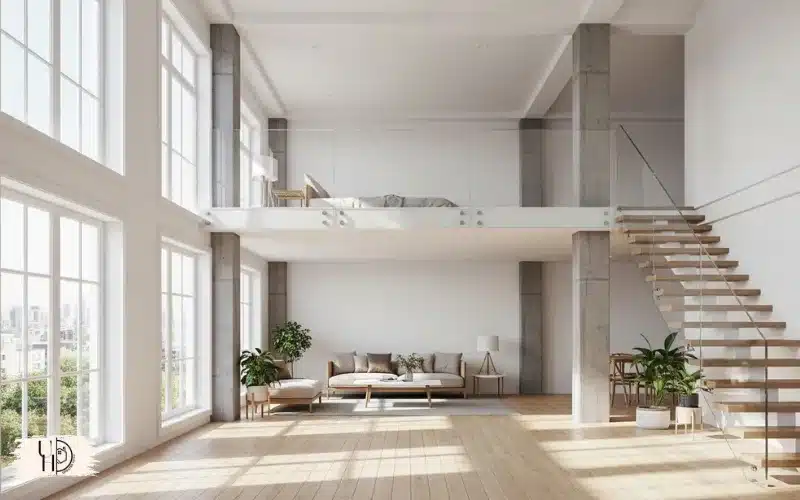
In today’s interior design, for lofts and multi-story condos, there’s a demand for space. Railings made of wrought iron or solid wood, or thin but strong cables can act like room dividers or block the light. The solution to this conundrum is glass railings, invisible barriers that are safe. The result? Lighter, brighter and more open living.
The great thing about glass in these spaces is that it’s protective and a magnifier. In open connections and lofts with stairwells and mezzanines, it keeps a connection to the elements below to make ceilings seem taller and spaces more expansive. On interior balconies overlooking a living room, the glass provides a ground floor connection – ideal if you are a parent and want to keep an eye on your children.
Why Choose Glass Over Other Materials?
| Feature | Glass Railing | Metal/Cable | Wood |
| Visual openness | High | Medium | Low |
| Light transmission | Excellent | Partial | Minimal |
| Maintenance | Low (wipe clean) | Moderate (rust/stain risk) | High (sealing, sanding) |
| Modern aesthetic | Seamless | Industrial | Traditional |
| Spatial perception | Expansive | Neutral | Enclosed |
Glass doesn’t overpower as other materials might. From minimalist to Scandinavian styles, and everything in between, including industrial chic, the right glass panel railing fits seamlessly.
Types of Interior Glass Railing Systems
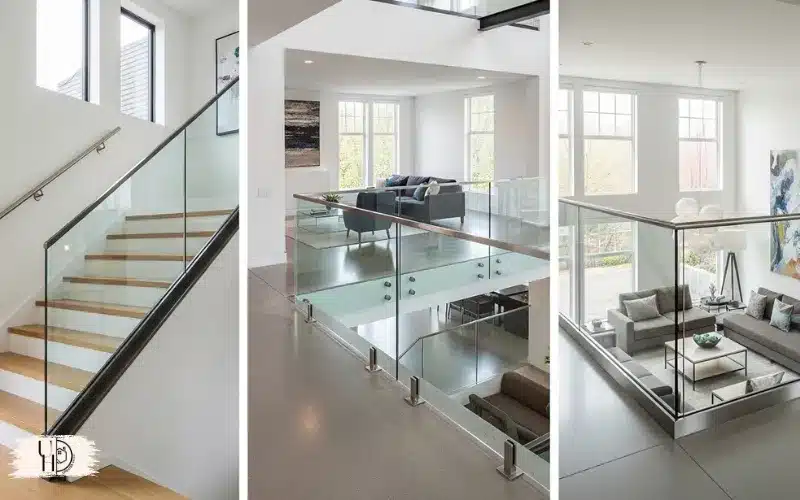
There are many glass railing types. Choose a system based on your space, regulations and style:
- Framed systems: Glass panes are framed by aluminum or stainless steel channels: top and bottom. They provide excellent structural support, and can be more manageable during retrofits.
- Frameless (or “topless”) systems: Glass panels are free standing and anchored only from the bottom (sometimes using spigots). This offers a clean look, suitable for luxury lofts.
- Custom: Glass coupled with wood or metal – may be used to integrate with existing structures.
Although outdoor systems (such as a glass deck railing that Calgary homeowners might use) must be structurally robust to support snow and wind, indoor systems focus on aesthetics, edging details and how it will blend with flooring (or stair treads). Safety tempered glass (10-12mm thick for indoor railing) shatters into blunt granules upon impact.
Design Flexibility and Customization
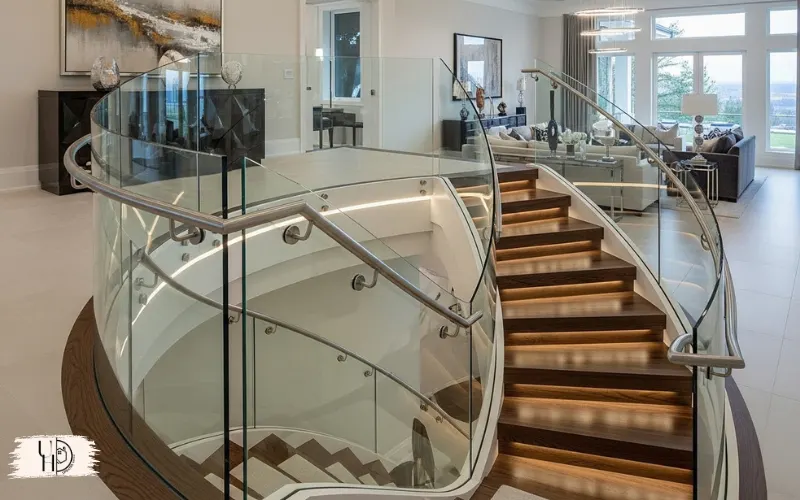
Perhaps glass’ best quality is flexibility. You can have your custom-crafted glass railing curved, set at an angle, or LED lit from the bottom to emit a gentle glow. And frosted or shaded versions can provide privacy for an open loft if you have a home office or reading room with sight lines to a living space.
What’s more, available hardware options (brushed nickel, matte black, clear anodized) can be matched with other hardware or stand out against the rest of the design. This ensures that the railing will be a prominent feature rather than an afterthought.
What’s Next: Practical Tips and Design Considerations

Opting for a glass railing is only part of the equation. How you install it affects its utility or becomes a nightmare of upkeep that’s hard to live with. Here are some things (often neglected until too late) we wish we knew before installing a glass railing to save time, money and frustration.
Safety and Code Compliance First
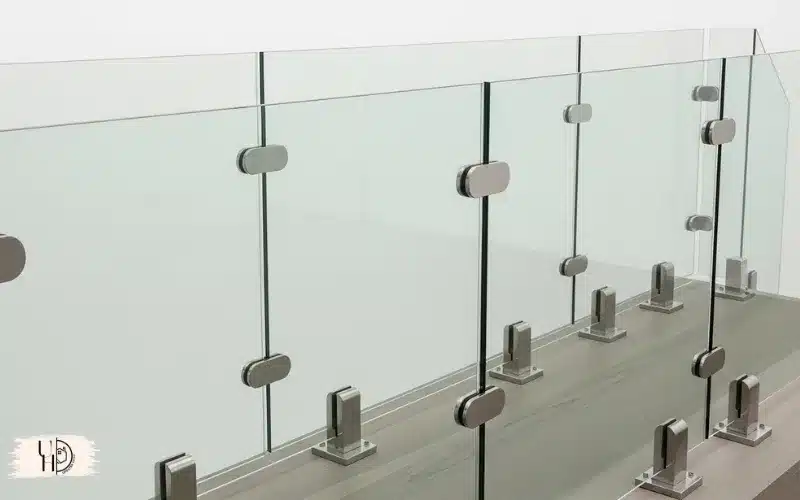
In Canada, an indoor loft or balcony railing typically has to be at least 36 inches (900 mm) tall, with some regions or cities requiring railings for high floors to be at least 42 inches (1070 mm). So consult your local building code. Use only tempered glass, which is five-times stronger than annealed (ordinary) glass and is less likely to cut if shattered (ideal for homes with little ones or fur babies).
Though a Calgary glass railing would need to be able to support the weight of snow (if outdoors), the main concerns for indoor railings are lateral loads and floor attachments.
Maintenance: Easier Than You Think

Contrary to popular belief, glass railings aren’t “high-maintenance” because of fingerprints or water zoning. But indoor applications aren’t plagued by hard water, pollen and dust like exterior versions (such as a glass deck railing for residents in Calgary). For interior panels:
- Dust weekly with a microfiber cloth and mild soap and water
- But avoid using ammonia cleaners (this can damage silicone seals)
- Squeegees dry the glass clean
A glass interior railing is easy to keep looking new with a little work – less than cleaning metal rails or re-sealing wooden balusters.
Design Integration Tips
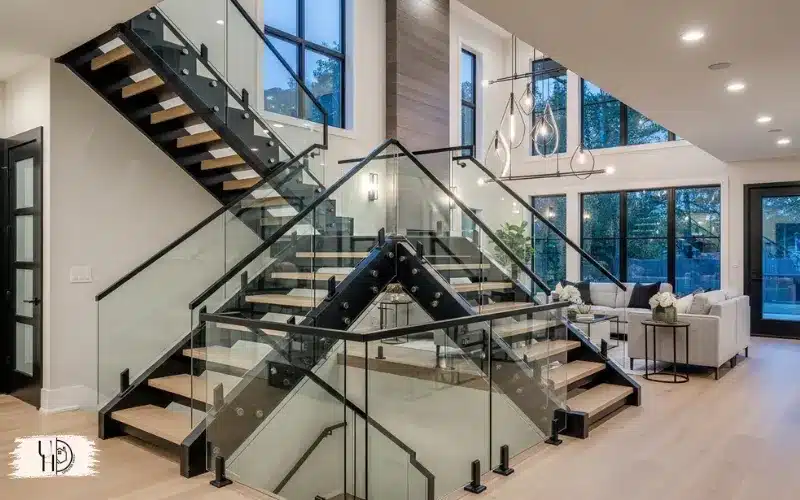
- Consider fixtures: For example, if you have black pucks on your kitchen cabinets, use matching railing clamps or base shoes.
- Think light: LED under-rail lights are great for night-time edge lighting with no glares (great for loft living with open-plan).
- No grout lines: For exposed brick or concrete, use frameless systems as they don’t detract from the finish. Systems with framing are suitable for plasterboard finishes.
For arabesque stairs or balconies (spiral, staggered mezzanines or round balconies) opt for a bespoke glass railing for safety and best fit. Fabricators now use 3D scanning to create bespoke measurements to minimize errors.
When to Choose Frameless vs. Framed
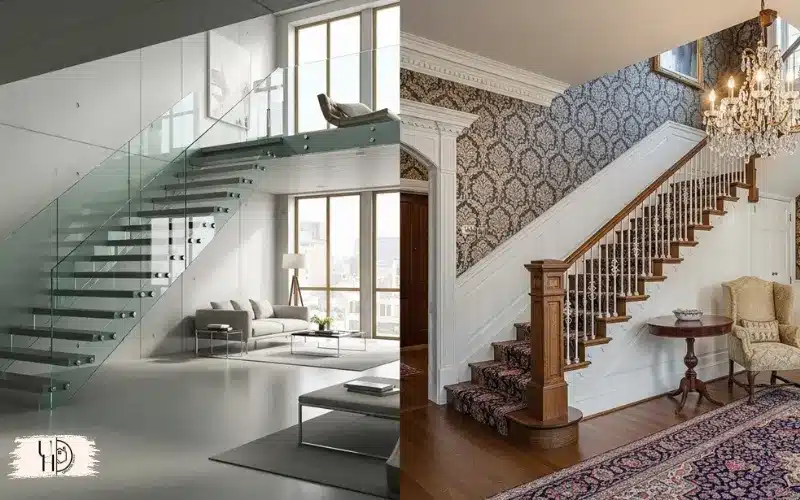
| Scenario | Recommended System | Why |
| Minimalist loft with white walls | Frameless glass panel railing | Maximizes “invisible” effect |
| Heritage conversion with mixed materials | Framed with wood/metal cap | Blends with existing trim |
| High-traffic household (kids, pets) | Framed or hybrid | Added structural redundancy |
| Tight budget | Framed | Generally lower material and install cost |
Tip: “Topless” (frameless) railing may be stylish, but they may require thicker glass (12-15mm) and intricate installation – all adding to cost and delivery times.
Avoiding Common Pitfalls
- See the mock-up: Request a life-size trial in place. Reflections or show flooring issues.
- Use quality hardware: In humid environments, or if the balcony will be used in kitchens and bathrooms, use 316-grade marine stainless steel to prevent corrosion.
- Consider access: If you will be lifting large items up to the second floor consider removable panels or a swing gate
Little things now, but potentially make or break living.
Closing thoughts: Simplicity, Spaciousness & Smart Design
The increase in glass railing is matched with trends in Canadian homes. As more people spend time in condos, city lofts and open-concept living areas, having a sense of space is the key to safety. A well-placed interior glass railing offers the best of both worlds: adding the required safety without blocking natural light and views, or impinging on the architecture.