


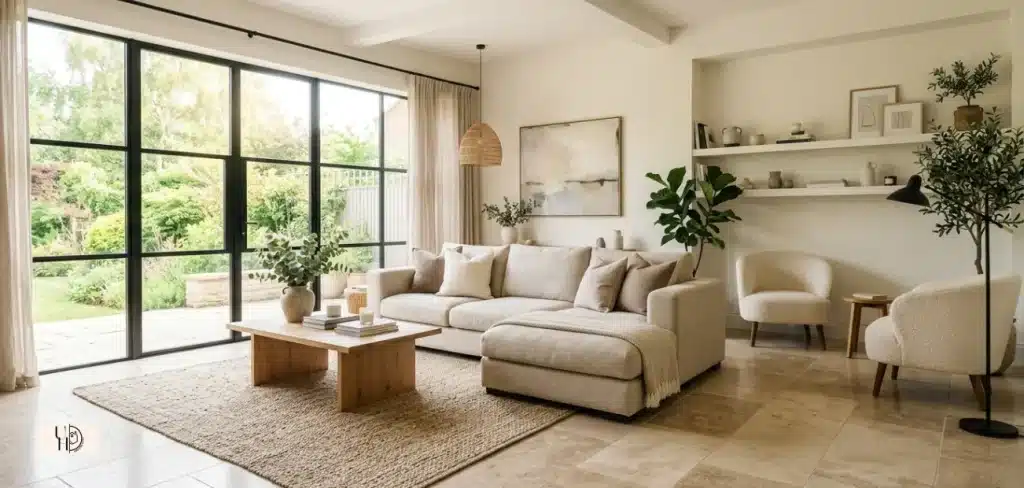
Some homes feel open the moment you walk in. The light moves easily, the space feels calm, and nothing feels heavy or closed in.
Then there are homes that feel the opposite — darker, tighter, and harder to relax in — even if they’re the same size.
It’s easy to assume the only fix is structural. Knock down a wall, open everything up, start again. But that’s rarely necessary. In most cases, the feeling of space comes from how a home is designed, not how it’s built.
Small, deliberate choices — like using materials such as GatherCo Limestone Tiles to reflect light and soften the overall look — can shift the entire feel of a room without touching the layout.
Table of Contents
Why some homes feel closed in
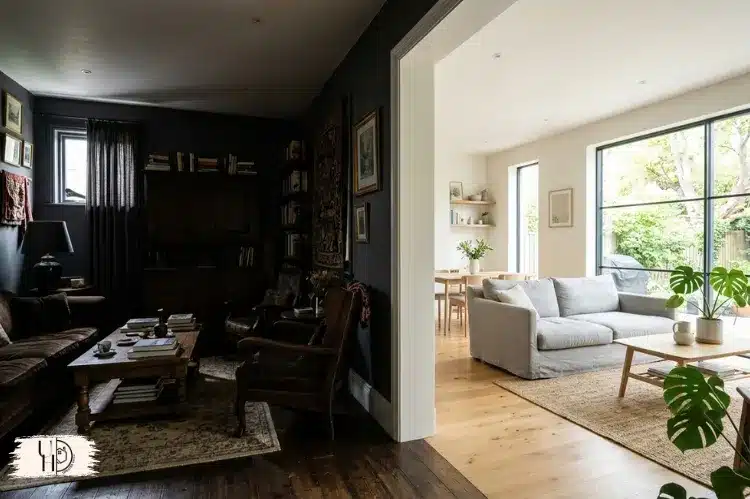
Before you can fix the problem, it helps to understand what’s causing it.
A home can feel cramped or heavy for a few common reasons:
- Surfaces that absorb rather than reflect light
- Too many contrasting materials competing for attention
- Dark or overly saturated colour choices
- Cluttered layouts that interrupt visual flow
Even if the actual space is generous, these factors can make it feel smaller than it is.
The goal isn’t more space — it’s better flow
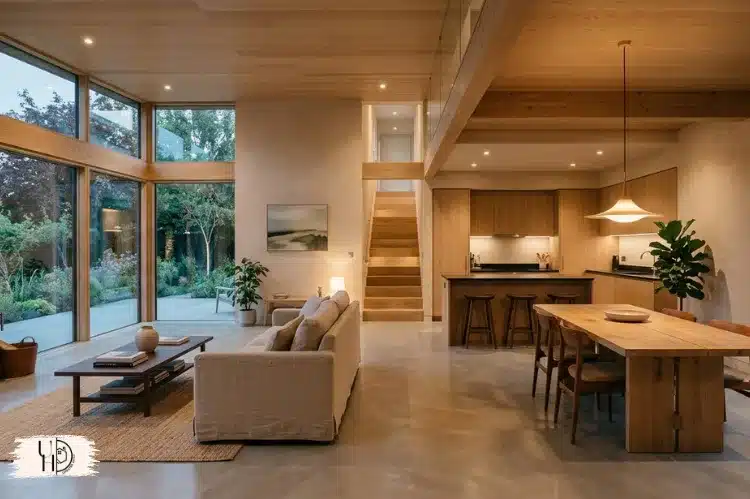
Creating a light, airy home is less about adding square footage and more about improving how the space feels.
You want the eye to move easily from one area to another, without stopping or feeling blocked. That sense of flow is what makes a home feel open.
When the flow is right, the space feels bigger, calmer, and more comfortable.
Start with the surfaces that carry the most weight
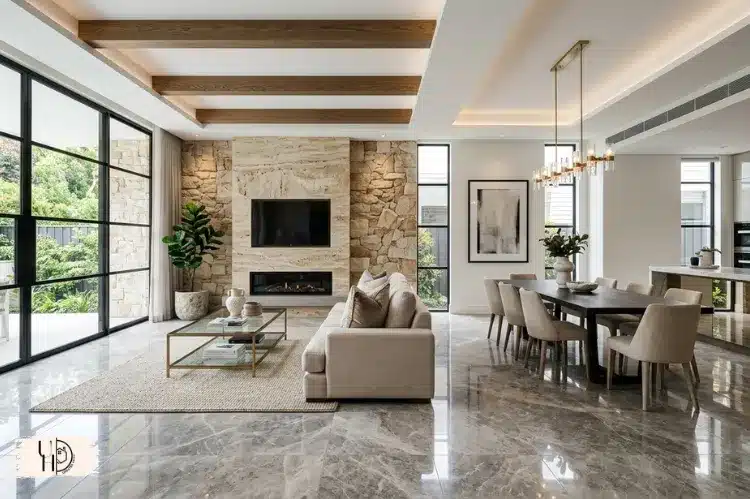
The largest surfaces in your home — floors, walls, and ceilings — have the biggest impact on how light behaves.
If these elements are working against you, no amount of decorating will fully fix the issue.
Choose lighter, reflective materials
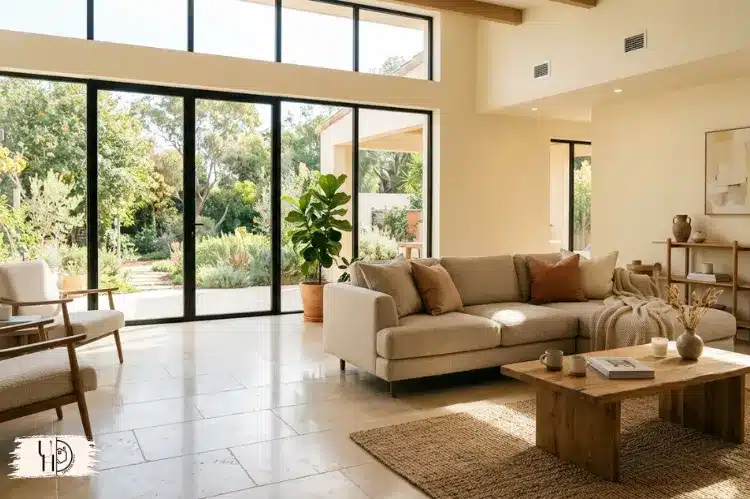
Materials with lighter tones and natural variation tend to:
- Reflect more light throughout the room
- Make the space feel brighter without additional lighting
- Create a softer, more relaxed atmosphere
This doesn’t mean everything has to be white. Subtle, natural tones often work better because they add warmth without heaviness.
Keep materials consistent
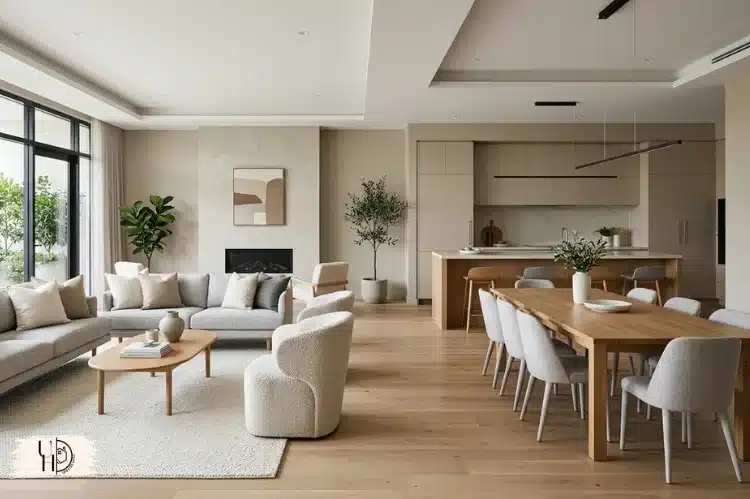
Switching between too many different finishes can break up the space visually.
Instead, aim for continuity:
- Similar tones across flooring and adjoining areas
- Smooth transitions between rooms
- Materials that complement rather than compete
This helps the space feel connected rather than fragmented.
Simplify your colour palette
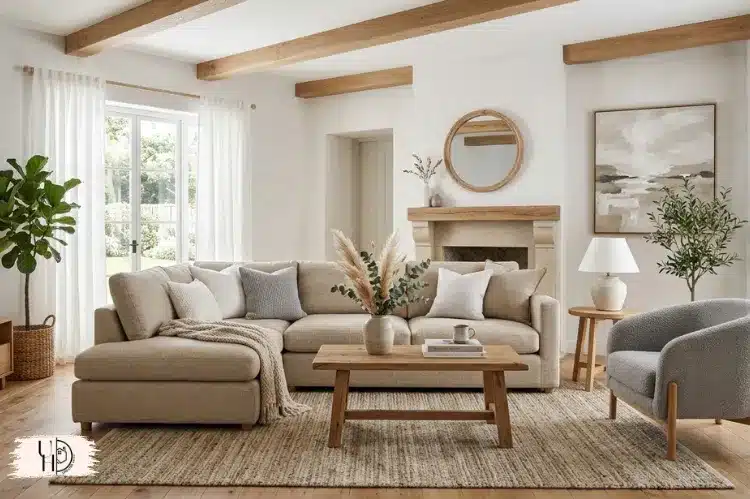
Colour has a strong psychological effect on how a room feels.
If your goal is to create a lighter, more open environment, a restrained palette works best.
A simple approach:
- One dominant neutral tone
- One or two softer complementary colours
- Natural accents like timber or greenery
Too many bold or contrasting colours can make the space feel busy and enclosed.
Let natural light do the work
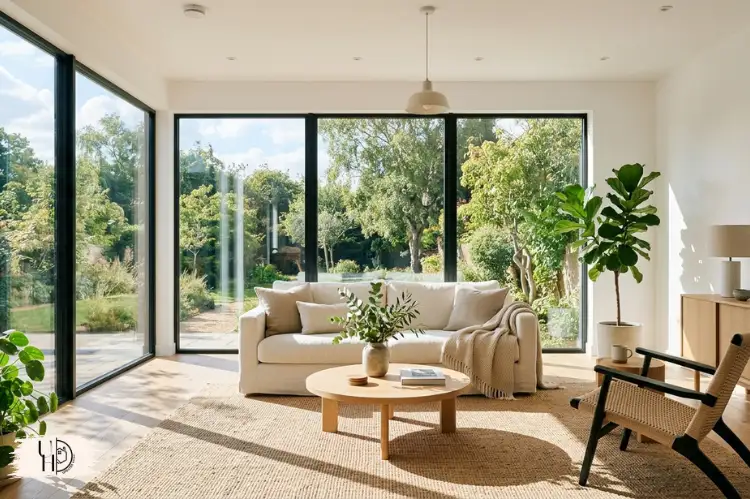
You don’t always need more light — you need to make better use of the light you already have.
Avoid blocking light sources

Take a look at your windows and how light enters the room.
- Are heavy curtains limiting the amount of light?
- Is furniture positioned in a way that blocks it?
- Are darker surfaces absorbing it?
Small adjustments here can make a noticeable difference.
Use placement to enhance brightness
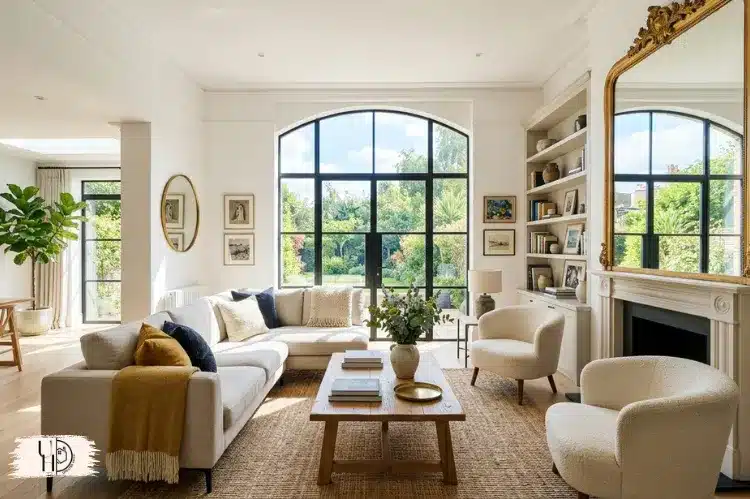
Strategic placement of mirrors, lighter furniture, or reflective surfaces can help distribute light more evenly.
The goal is to allow light to travel, not stop.
Reduce visual clutter
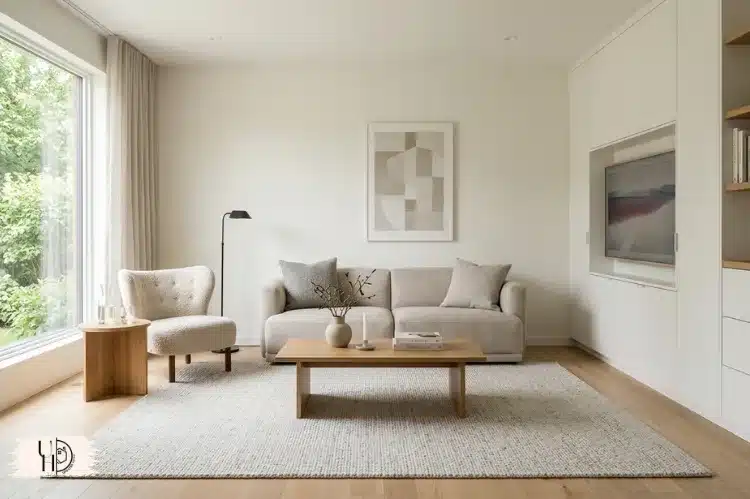
Clutter isn’t just about how many items are in a room. It’s about how those items interact visually.
Even a moderately furnished space can feel crowded if:
- There’s no clear focal point
- Items are mismatched or overly bold
- Surfaces are filled without intention
Simplifying what’s in the room helps create breathing space, which contributes to that airy feeling.
Use layout to guide movement
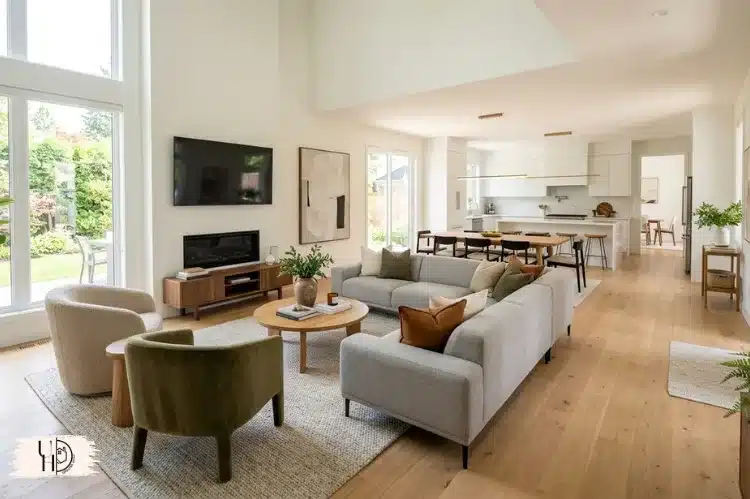
How you arrange your space matters just as much as what you put in it.
A good layout:
- Leaves clear pathways through the room
- Avoids unnecessary obstacles
- Encourages natural movement from one area to another
If the layout feels awkward, the space will feel smaller, regardless of its actual size.
A quick example that shows the difference
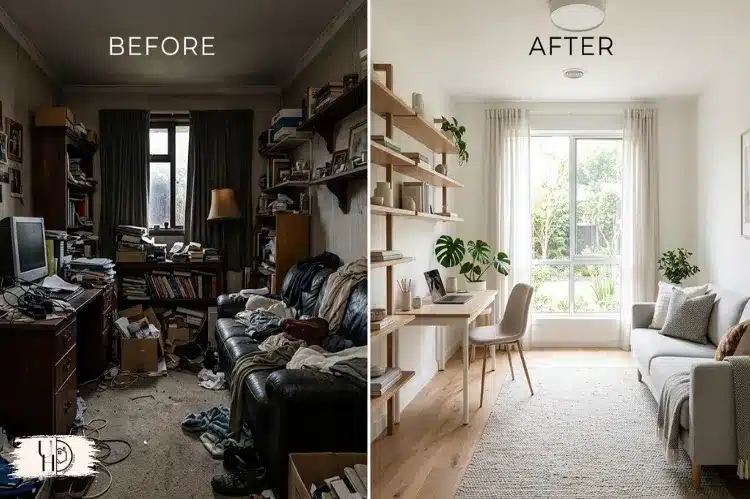
Imagine a living area with dark flooring, heavy furniture, and multiple contrasting finishes.
Even with good lighting, it can feel enclosed.
Now imagine the same room with lighter, cohesive surfaces, fewer competing materials, and a clearer layout.
Nothing structural has changed, but the space feels noticeably more open and relaxed.
That’s the impact of thoughtful design choices.
It’s about removing friction, not adding more
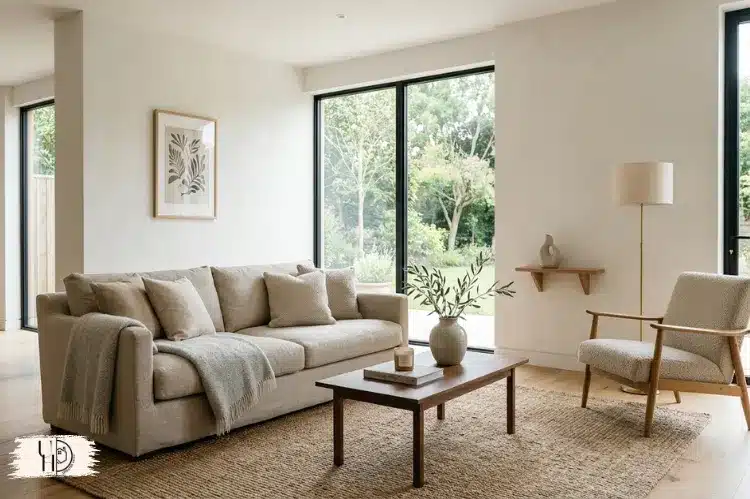
When a home feels heavy or closed in, the instinct is often to add more — more lighting, more decor, more features.
But the real improvement usually comes from simplifying.
- Fewer materials
- Better consistency
- Smarter use of light
- Cleaner layouts
When you remove the elements that interrupt flow, the space starts to open up on its own.
Creating a light, airy home isn’t about dramatic renovations. It’s about making better
decisions with the space you already have — and letting those decisions work together to create a calmer, more open environment.