


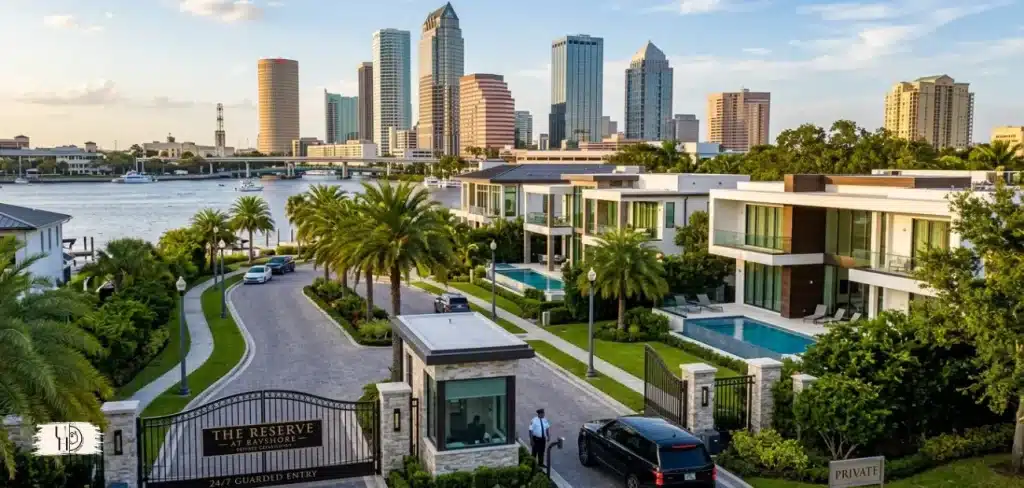
When people think of gated communities in Florida, their minds tend to drift east—toward the manicured estates of Palm Beach, the oceanfront compounds of Boca Raton, or the golf-cart communities tucked behind towering hedges in Jupiter.
Florida’s Atlantic Coast has long dominated the conversation around luxury, private residential living, and for good reason. But here’s what the data—and the people quietly moving there—already know: Tampa is one of the most compelling gated community markets in the entire state, and it’s still flying under the radar.
Below, we’re breaking down why gated communities have historically clustered on Florida’s east coast, what Tampa’s market actually looks like today, and why buyers who overlook the Gulf Coast side of the state may be leaving serious value on the table.
Table of Contents
Why Florida’s Atlantic Coast Became the Gated Community Capital
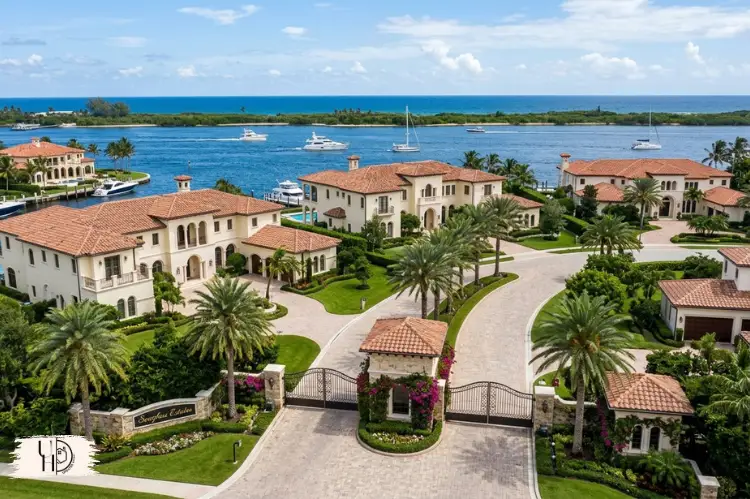
The concentration of gated communities along Florida’s Atlantic Coast is no accident. Palm Beach County alone contains hundreds of gated developments, ranging from entry-level HOA communities to ultra-luxury enclaves like The Bears Club in Jupiter and Admirals Cove in Jupiter Inlet Colony. Broward and Miami-Dade counties follow close behind.
Several factors drove this geographic clustering:
Wealth migration patterns: Florida’s east coast served as the primary landing point for Northeastern transplants—particularly from New York, New Jersey, and Connecticut—throughout the latter half of the 20th century. Wealthy retirees and second-home buyers followed existing communities, social networks, and established luxury infrastructure.
Proximity to international airports: Miami International and Fort Lauderdale-Hollywood International made the Atlantic Coast exceptionally accessible for international buyers, particularly from Latin America and Europe. That demand fueled high-end residential development at scale.
Brand recognition: Communities like Boca Raton and Palm Beach built reputations over decades. That brand recognition creates a self-reinforcing cycle—luxury buyers seek out luxury markets, which attracts more development, which strengthens the brand further.
The result is a deeply mature market on Florida’s east coast, with gated communities across virtually every price point and lifestyle category.
So Where Does Tampa Fit In?
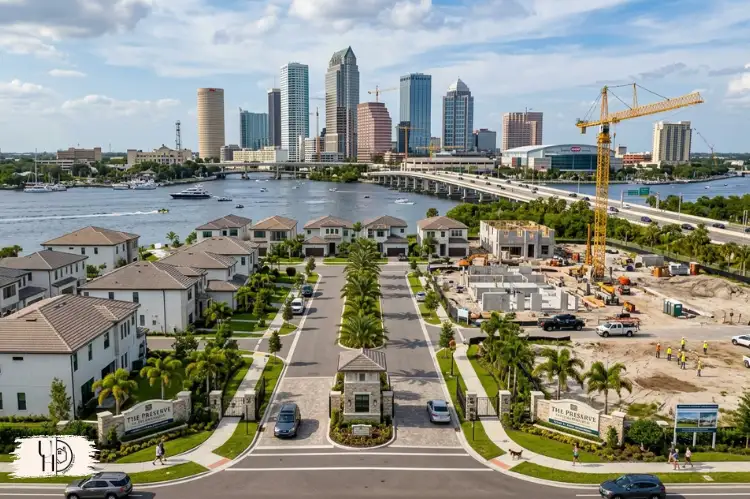
Tampa doesn’t have the same origin story as Palm Beach or Boca Raton. Historically, it was a port city—cigar manufacturing, shipping, commerce. The luxury residential market developed later and more gradually, which means Tampa never quite captured the same spotlight. But that’s changing, and the shift has been accelerating since roughly 2020.
Tampa’s metropolitan population surpassed 3.2 million people, and the broader Tampa Bay region has ranked among the fastest-growing metros in the United States for several consecutive years. Remote work flexibility, Florida’s lack of state income tax, and comparatively lower cost of living relative to South Florida have drawn a new wave of high-income buyers to the area—many of whom are specifically seeking gated community living.
What Gated Communities in Tampa Actually Look Like
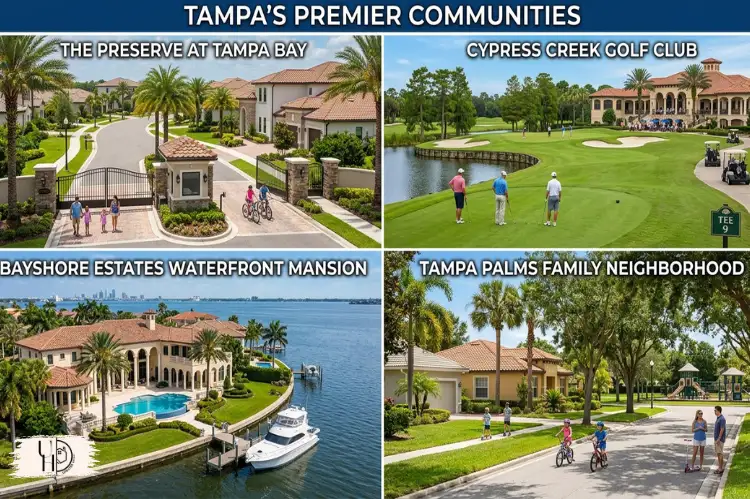
Let’s be clear: Tampa’s gated community inventory is not a consolation prize. The market spans a wide range of product types, from established golf communities to newer master-planned developments, and it covers a broad geographic footprint across Hillsborough County and neighboring Pasco and Sarasota counties.
Established Golf and Country Club Communities
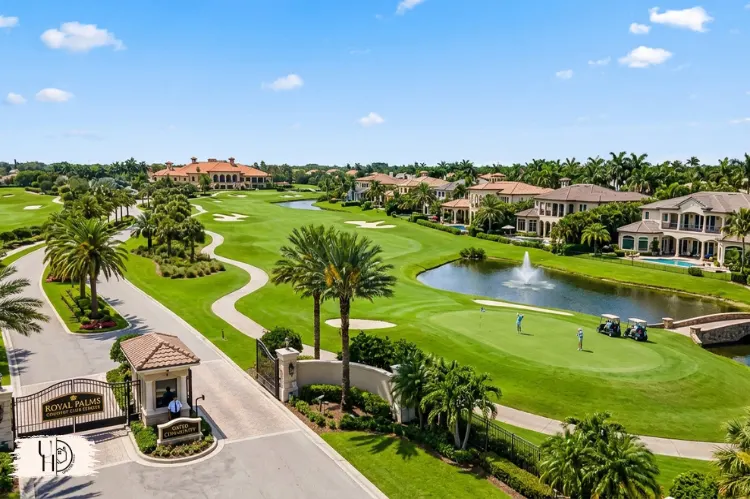
Communities like Avila, located in New Tampa, represent the top tier of Tampa’s gated residential market. Avila is a private, guard-gated golf community featuring custom estate homes, and it has maintained its status as one of the most prestigious addresses in the Tampa Bay region for decades. Median home prices in Avila consistently rank among the highest in Hillsborough County.
Elsewhere, communities like Tampa Palms and Hunter’s Green offer gated sections with golf course access, mature landscaping, and established HOA infrastructure—a combination that appeals strongly to buyers relocating from comparable communities in the Northeast or Midwest.
Master-Planned Communities with Gated Sections
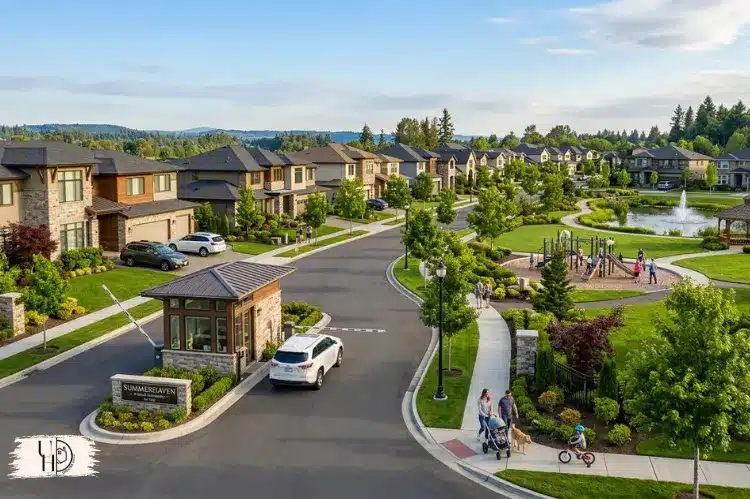
Lakewood Ranch, while technically straddling Manatee and Sarasota counties just south of Tampa, functions as a key part of the broader regional market. It contains multiple gated villages within its master plan, including The Lake Club and Esplanade Golf and Country Club—developments that rival anything comparable on the east coast in terms of amenities, design quality, and price point.
Within Hillsborough County proper, communities like FishHawk Ranch and Waterset feature gated sections targeting families and move-up buyers, with price points that remain significantly more accessible than equivalent product in Palm Beach County.
Waterfront and Coastal Gated Properties
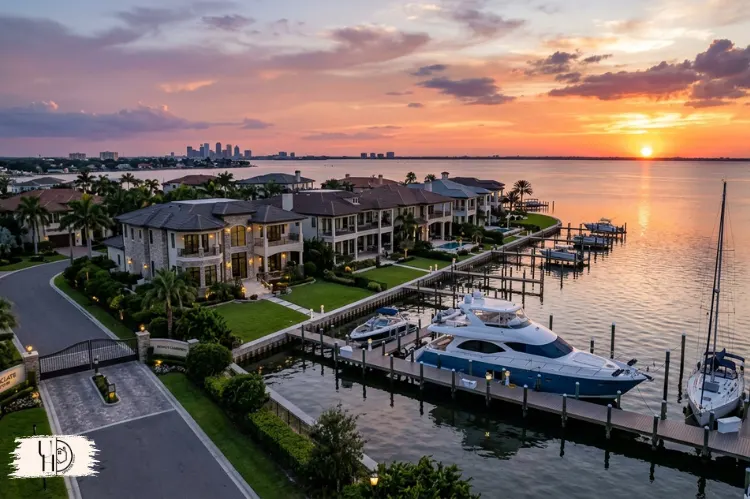
South Tampa neighborhoods like Culbreath Isles and Sunset Park Isles contain gated or semi-private waterfront streets with direct bay access—a product type that simply doesn’t exist at this price-to-location ratio on the Atlantic Coast. Comparable waterfront properties in Boca Raton or Palm Beach can command two to three times the price for similar square footage and water access.
How Tampa’s Gated Communities Stack Up Against the Rest of Florida
Alright, let’s have some fun with this—because the comparison is more interesting than most people expect.
Tampa vs. Palm Beach County: Palm Beach wins on prestige, full stop. If your primary goal is the historic cachet of an address, nothing on Florida’s Gulf Coast replicates that. But if you’re comparing square footage per dollar, lot size, commute times, traffic, and overall quality of life? Tampa is competitive in almost every category, and it outright wins in several.
Tampa vs. Naples: Naples has long been considered the Gulf Coast’s answer to Palm Beach—ultra-luxury, golf-centric, snowbird-heavy. The product quality in Naples is exceptional, but so are the prices. Tampa offers similar lifestyle elements at a discount, and it adds something Naples doesn’t: a proper city. Professional sports teams (the Buccaneers, Lightning, and Rays all play in Tampa), a thriving restaurant and arts scene, a major international airport, and a growing tech and finance employment base give Tampa a year-round energy that retirement-oriented markets can’t match.
Tampa vs. Sarasota: This one’s closer. Sarasota and Tampa are genuinely competing for similar buyer profiles right now—culturally sophisticated, outdoors-oriented, with an appreciation for architecture and design. Sarasota edges Tampa on aesthetics in certain pockets, but Tampa’s scale and employment diversity give it a long-term stability advantage.
Why Tampa Is Still Undervalued
Despite all of the above, Tampa’s gated community market remains meaningfully underpriced relative to comparable Florida markets. A buyer who can purchase an estate home in Avila for $2 million to $3 million would likely spend $4 million to $6 million for comparable product in a top Palm Beach County gated community.
Part of this discount reflects perception lag—Tampa hasn’t fully shed its working-class port city identity in the minds of buyers who haven’t spent time there. Part of it reflects the relative youth of the luxury market; communities that have only been established for 20 to 30 years lack the multi-generational prestige of older east coast enclaves.
But perception catches up with reality eventually. Inventory in Tampa’s top gated communities remains constrained, new luxury development has slowed due to land scarcity in desirable corridors, and demand from in-migration continues to grow. The window of relative value is open, but it won’t stay open indefinitely.
What Buyers Should Consider Before Purchasing in a Tampa Gated Community
For buyers actively evaluating Tampa’s gated community market, several practical factors deserve close attention:
HOA structure and financial health: Review HOA reserve fund balances, recent special assessments, and pending capital expenditure plans. A well-funded HOA is one of the most important indicators of long-term community quality.
Flood zone designation: Florida flood risk varies significantly by location. Some of Tampa’s most desirable waterfront addresses carry elevated flood insurance costs. Request FEMA flood zone maps and current insurance quotes before committing.
Guard-gated vs. access-controlled: Not all gated communities offer the same level of security. Distinguish between staffed guard gates, automated access systems, and symbolic gates with limited enforcement. Buyers prioritizing security should verify the specific access control infrastructure before purchasing.
Proximity to employment centers: Tampa’s geography means that location within the metro matters considerably. Communities north of the city in Pasco County, while often more affordable, can involve substantial commute times to downtown Tampa or the airport corridor. Understand the drive time implications before placing value on price-per-square-foot comparisons.
The Case for Tampa’s Gated Community Market

Tampa’s gated community market occupies a unique position in Florida real estate. It offers the lifestyle attributes—security, community, amenities, privacy—that buyers associate with Florida’s established luxury markets, at a price point that still reflects the city’s underappreciated status.
For buyers who have done their research, that combination is exactly the opportunity they’ve been looking for. The Atlantic Coast markets are mature, competitive, and priced accordingly. Tampa still has room.