


More families are turning a spare room, a garage corner, or even part of the kitchen into a real home science lab for their kids. Microscopes, chemistry sets, small incubators, telescopes, and rock tumblers are becoming just as common in houses as toy bins. It is a wonderful trend. Kids get hands-on learning, and parents get a break from screens.
But here is something nobody talks about. What happens to that lab when your family moves? A science corner is not like a regular bedroom. It often holds fragile glassware, small electronics, chemicals, and equipment that cost real money. Packing it wrong can mean broken gear, spilled chemicals, or a very upset young scientist on move-in day.
Let’s walk through how to protect your child’s lab space during a move, without losing your mind in the process.
Table of Contents
Why a Home Lab Needs Special Moving Care
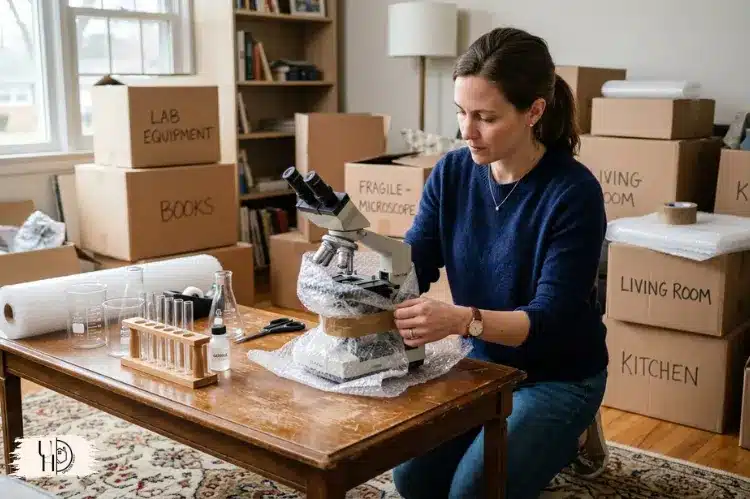
Think about what actually sits in a typical home lab setup. Glass beakers. Digital scales. Magnifying lenses. Maybe a small centrifuge or a telescope with delicate optics. None of that belongs in a regular moving box with towels and picture frames.
This is actually similar to what happens on a much bigger scale in offices and research facilities. Companies that run real laboratories hire specialists because the risks are too high otherwise. If you search around, you’ll find laboratory relocation services built just for this purpose, designed to handle fragile instruments, chemicals, and sensitive gear during a move.
Families with a serious home lab setup can borrow the same thinking, even on a smaller scale. You do not need to hire a moving company just for a shelf of science supplies, but you should treat that shelf with the same seriousness a lab manager would.
Start by making a simple list. Walk through the lab space and write down every item that is fragile, electronic, or chemical based. This list becomes your packing map later, so do not skip it.
Sort Before You Pack
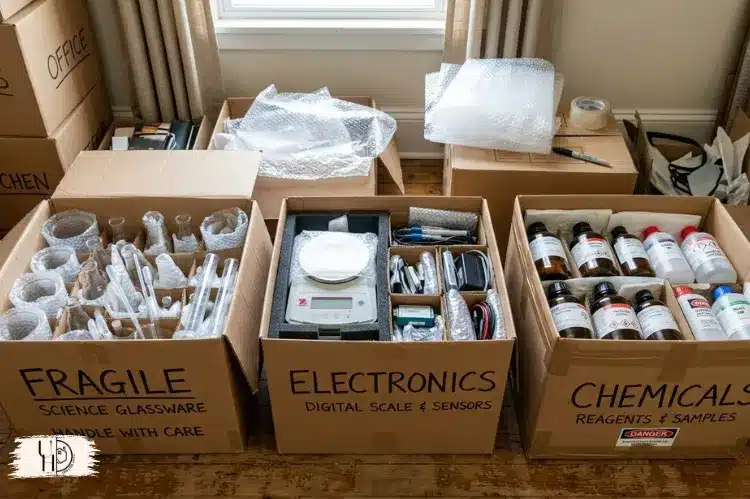
Once you have your list, sort everything into three groups.
The first group is fragile items like glass tools, lenses, and anything with moving parts.
These need bubble wrap, sturdy boxes, and clear labels that say fragile on every side.
The second group is electronics. Digital microscopes, small computers, coding kits, and battery powered tools go here. Keep original boxes if you still have them. If not, use anti static bags or wrap them in soft cloth before boxing.
The third group is anything chemical based, even simple stuff like vinegar, baking soda, or basic chemistry set solutions. These should never go in the moving truck with your furniture. Many movers will not even transport certain liquids for safety reasons. It is smarter to hand carry small amounts in your own car, sealed tightly and kept upright.
Sorting this way also helps if you’re short on room. Just like maximizing space in a small room requires smart categories and labeled storage, a lab in transition benefits from the same kind of grouping so nothing gets lost in a chaotic pile of boxes.
Setting up the New Space the Right Way
Once you arrive at the new home, resist the urge to just dump everything back on a shelf. Take a few days to plan the new layout first.
Pick a spot with good lighting and easy access to water if possible. A corner of a playroom, a section of the garage, or even a sturdy table in a spare room can work well. Keep breakable items on lower shelves so little hands are not reaching high for a glass jar.
Label bins clearly so your child can find their own supplies without digging through everything. This actually builds independence and keeps the space from turning into clutter within a week. There is a lot of solid guidance out there on organizing kids’ science and STEM materials by category, and following that kind of system from day one saves a lot of headaches later.
Give your child a role in the unpacking too. Let them decide where their favorite tools go. It turns a stressful move into something exciting instead. Kids remember their science corner as their space, and having a say in where things land helps the new house feel like home faster.
A Few Extra Tips Parents Often Miss
Take photos of your lab setup before you disassemble it. This makes reassembly so much easier once you are in the new place. You will not have to guess where the microscope cord goes or how the shelf was arranged.
Check your homeowners or renters insurance before the move. Some policies cover valuable equipment during a relocation, and it is worth a five minute phone call to confirm.
If your child’s lab includes anything with strict temperature needs, like certain biology samples or plant experiments, plan the moving day around weather. A hot moving truck in summer can ruin sensitive specimens fast.
Lastly, give yourself grace. Moving is stressful enough without also feeling like you need to run a professional lab relocation. Do your best with sorting, labeling, and careful packing, and your child’s little lab will be back up and running within days of moving in.
A home science lab is a gift to a curious kid. With a bit of planning, it can survive a move just fine and be ready for the next round of experiments in the new house.